


GPU Performance Engineer - Neural Reconstruction


Today, we’re tapping into the unlimited potential of AI to define the next era of computing. An era in which our GPU acts as the brains of computers, robots, and self-driving cars that can understand the world. Doing what’s never been done before takes vision, innovation, and the world’s best talent. As an NVIDIAN, you’ll be immersed in a diverse, supportive environment where everyone is inspired to do their best work. Come join the team and see how you can make a lasting impact on the world.
We are now looking for a GPU Performance Engineer for Neural Reconstruction!
NVIDIA is building the future of computer graphics, simulation, robotics, and embodied AI. Neural reconstruction and Gaussian Splatting are changing how 3D worlds are collected, represented, optimized, and rendered. These workloads push the limits of GPU computing, differentiable rendering, computer vision, and production ML systems. In this role, you will help make neural reconstruction faster, more scalable, and more reliable. You will work across PyTorch, CUDA, C++, and GPU profiling to optimize training and rendering workflows used in sophisticated 3D reconstruction systems. The ideal candidate enjoys working close to the hardware while understanding the ML and 3D vision goals behind the system.
What You'll Be Doing:
Profile end-to-end neural reconstruction workflows and identify bottlenecks across data loading, initialization, training, rendering, evaluation, and export.
Improve CUDA and PyTorch performance for Gaussian Splatting and neural reconstruction workloads, including camera/lidar data, multiview batching, large-scene rendering, and memory-sensitive training paths.
Analyze GPU performance using tools such as Nsight Systems, Nsight Compute, NVTX, PyTorch Profiler, CUDA events, and benchmark dashboards.
Optimize sparse and irregular rendering workloads, including tile-level masking/culling, sparse gradients, batching, and multi-GPU execution.
Translate high-impact Python, NumPy, or PyTorch bottlenecks into efficient CUDA/C++ or PyTorch-native implementations when appropriate.
Validate that performance improvements preserve reconstruction quality, numerical behavior, camera/lidar correctness, and production reliability.
Build repeatable benchmarks, regression tests, and profiling workflows to catch performance and quality regressions early.
Collaborate with researchers, CUDA engineers, ML engineers, and production teams to turn promising prototypes into maintainable, reviewable, production-quality code.
What We Need To See:
BS, MS, PhD, or equivalent experience in Computer Science, Computer Engineering, Electrical Engineering, Applied Math, Robotics, Computer Vision, Machine Learning, or a related field (or equivalent experience) with 12+ years of experience.
Strong programming skills in Python and C++!
Hands-on experience with PyTorch or a similar tensor/autograd framework.
Experience optimizing GPU-accelerated workloads using CUDA, C++/CUDA extensions, or related GPU programming approaches.
Practical experience with profiling and performance analysis, including root-causing CPU/GPU bottlenecks, synchronization overhead, memory pressure, kernel launch overhead, and framework-level inefficiencies.
Ability to develop benchmarks and validate that optimizations preserve correctness, numerical behavior, and user-visible quality.
Strong communication skills, including the ability to explain performance tradeoffs, risks, and results to research and engineering partners.
Ways To Stand Out From The Crowd:
Experience with Gaussian Splatting, NeRF, differentiable rendering, rasterization, neural rendering, SLAM, 3D reconstruction, or robotics/autonomous-vehicle perception pipelines.
Deep CUDA performance experience, including memory access patterns, shared memory, atomics, occupancy, launch configuration, synchronization, and numerical stability.
Experience optimizing PyTorch workloads with custom operators, fused kernels, sparse tensors, distributed training, or distributed rendering.
Familiarity with camera and lidar geometry, projection models, calibration, rolling shutter, depth rendering, or multi-sensor reconstruction.
Experience improving large production ML systems where quality metrics, training speed, memory footprint, and developer velocity must be balanced.
Widely considered to be one of the technology world’s most desirable employers, NVIDIA offers highly competitive salaries and a comprehensive benefits package. As you plan your future, see what we can offer to you and your family www.nvidiabenefits.com/
Your base salary will be determined based on your location, experience, and the pay of employees in similar positions. The base salary range is 224,000 USD - 356,500 USD for Level 5, and 272,000 USD - 431,250 USD for Level 6.You will also be eligible for equity and benefits.
Applications for this job will be accepted at least until May 30, 2026.This posting is for an existing vacancy.
NVIDIA uses AI tools in its recruiting processes.
NVIDIA is committed to fostering a diverse work environment and proud to be an equal opportunity employer. As we highly value diversity in our current and future employees, we do not discriminate (including in our hiring and promotion practices) on the basis of race, religion, color, national origin, gender, gender expression, sexual orientation, age, marital status, veteran status, disability status or any other characteristic protected by law. Infernozilla
 Aftershock Media Group
Aftershock Media Group
Aftershock Media Group
 WarForge Studio LLC
 Mattel
Mattel
Mattel
 Swish Breaks
 JustPlay GmbH
 Meme Wars
Mattel
Meme Wars
Mattel
-
 Switch 2 tops US hardware charts in May as PS5 and Xbox record their worst May sales figures in decades
 -
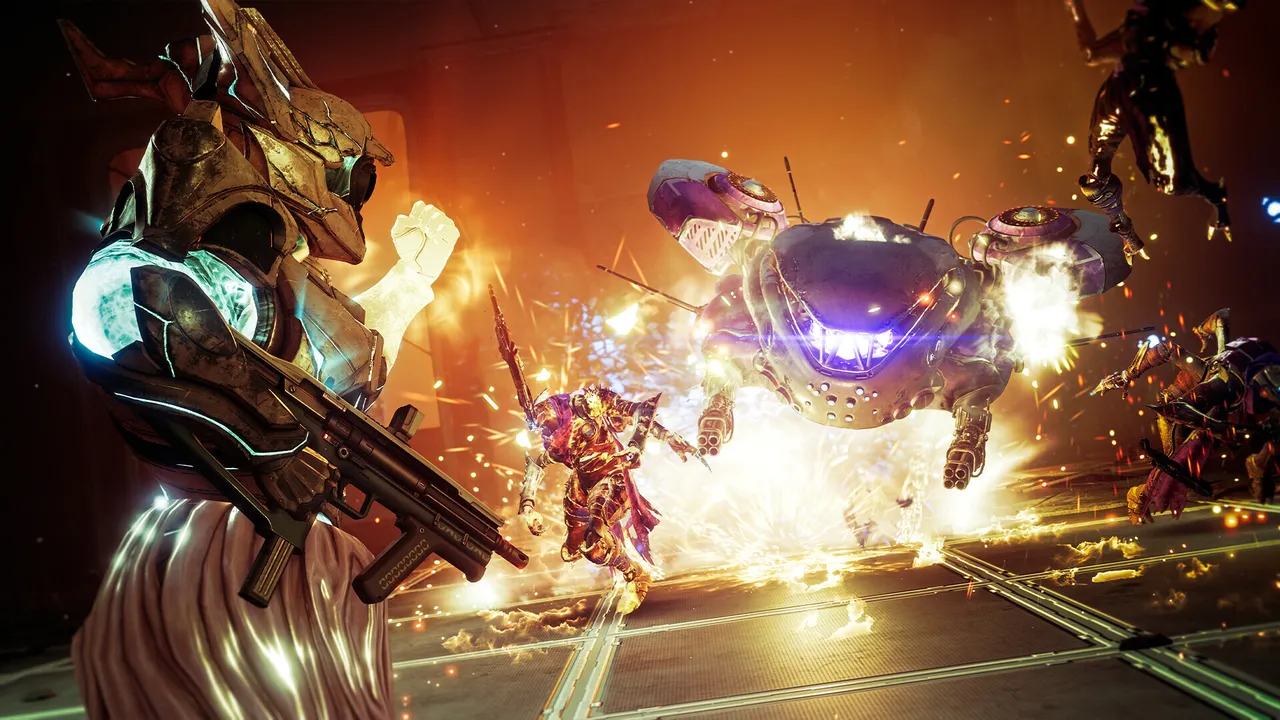 Bungie studio head Justin Truman has stepped down as 292 staff are confirmed cut in latest layoff round
 -
 Layoffs have begun at Compulsion Games as Xbox's studio reset continues
 -
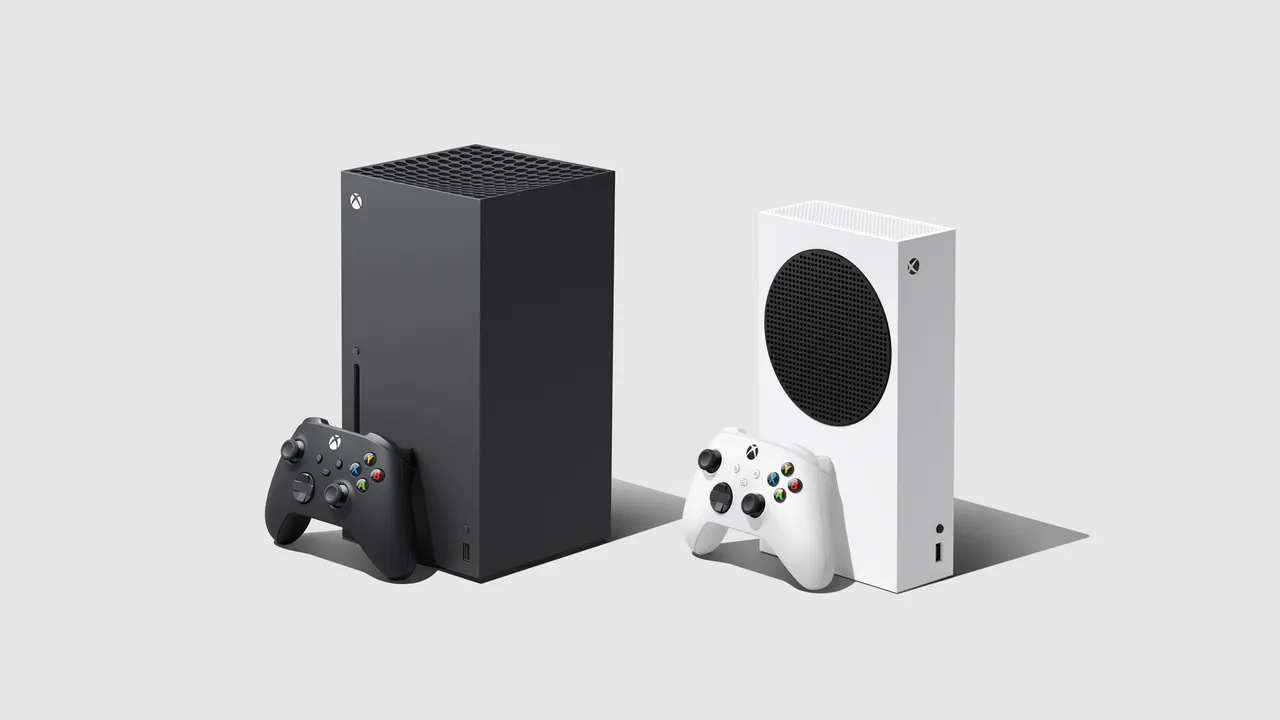 Microsoft has announced a third price increase for Xbox Series X|S consoles, effective August 1